
The information provided here is for educational purposes and does not replace a doctor's visit.
- Persistent Eczema: If dry patches become red, swollen, or bleed, this could be eczema requiring prescription treatment.
- Consult a doctor before changing your routine significantly if you have a diagnosed skin condition.
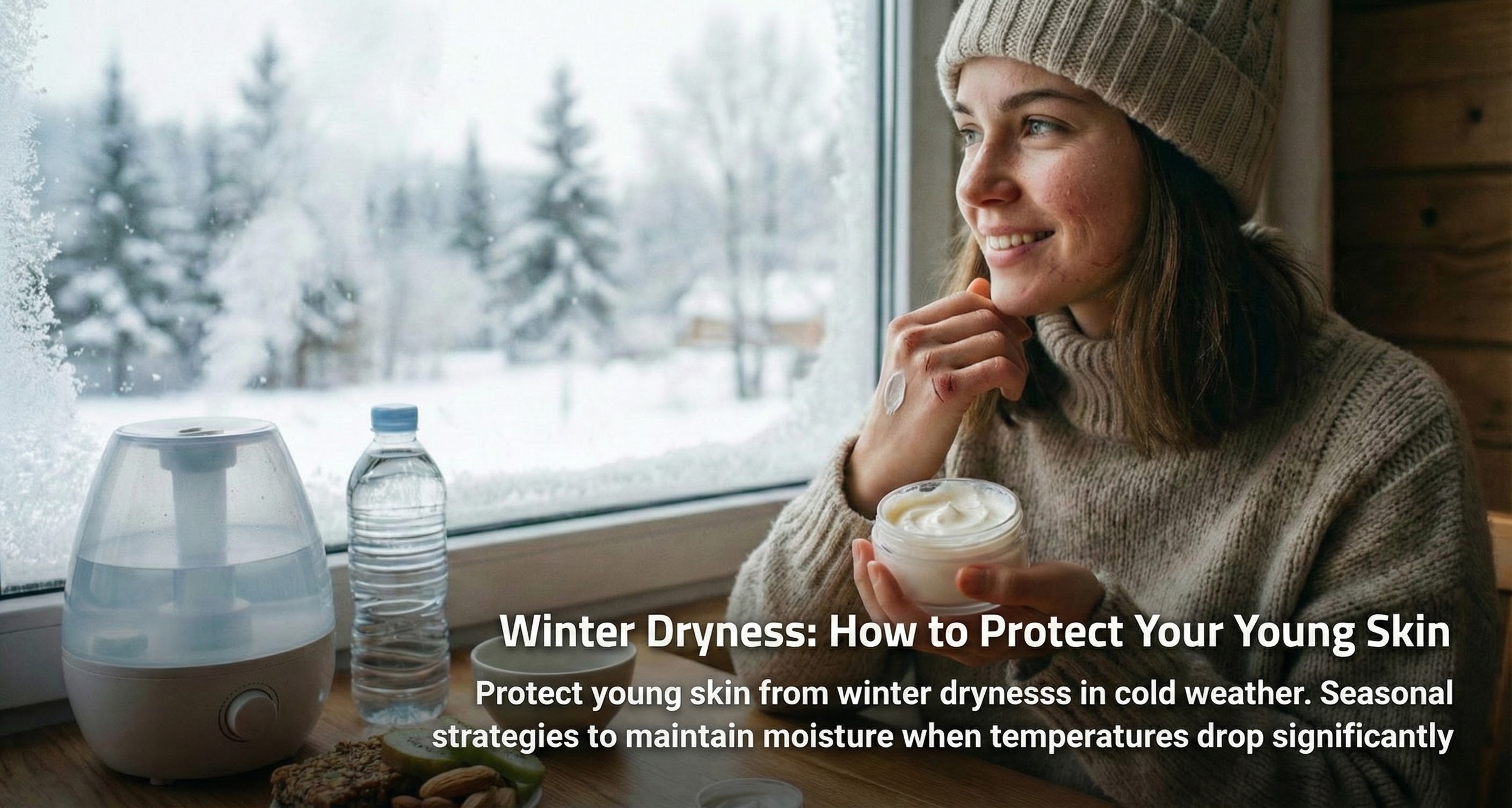
Does it feel like your skin turns into a desert the second the weather starts to get cold? The itching, the flaking, and that annoying tight feeling—winter dryness is real, and it can be especially tough on young skin. You are not alone in this.
But here’s the good news: with a few simple tweaks to your routine, you can keep your skin smooth, hydrated, and glowing all winter long.
Why Does Our Skin Get So Dry in Winter?
It's a perfect storm of factors that suck the moisture right out of your skin.
- Low Humidity: The cold air outside holds way less moisture than warm air.
- Indoor Heating: That cozy heater inside zaps moisture from the air, and in turn, from your skin [1].
- Hot Showers: A long, hot shower might feel amazing, but it strips your skin of its natural, protective oils.
All of this weakens your skin barrier, which is the outer layer that keeps moisture in and irritants out.
Your Guide to Beating Winter Dryness
Don't just surrender to flaky skin. Get your glow back with these easy tips.
1. Moisturize Smarter
This is your biggest weapon against dryness. But not all moisturizers are created equal.
- Choose the right formula: In winter, you might need a thicker moisturizer than you use in the summer. Look for creams with ingredients like ceramides, shea butter, and hyaluronic acid.
- Ceramides: Help repair your skin barrier.
- Shea Butter: A rich emollient that deeply nourishes.
- Hyaluronic Acid: Attracts water to your skin.
- Timing is everything: The best time to apply moisturizer is right after you shower or wash your face. Gently pat your skin damp and slather on your moisturizer to lock in that hydration.
Quick Comparison: Moisturizer Ingredients
| Ingredient | Best For | How it Works |
|---|---|---|
| Hyaluronic Acid | Dehydrated Skin | Attracts 1000x its weight in water |
| Ceramides | Damaged Barrier | Glues skin cells together |
| Shea Butter | Dry/Flaky Skin | Seals in moisture (Occlusive) |
| Glycerin | All Skin Types | Draws moisture into skin |
2. Cleanse Gently
Put down the harsh cleansers that leave your skin feeling tight. You want to clean your skin, not strip it of every last drop of moisture.
What to do: Opt for a creamy, hydrating, and fragrance-free cleanser. These gently remove dirt and oil without disrupting your skin barrier.
3. Go Easy on the Hot Showers
We know, we know. A steamy shower on a cold day is one of life's little pleasures. But your skin doesn't agree. Hot water strips away your natural oils fast.
What to do: Try to use lukewarm water instead of hot, and keep your showers short (5 to 10 minutes) [2].
4. Don't Forget Your Lips and Hands
Your lips and hands have very few oil glands, which makes them especially prone to drying out and chapping.
- For lips: Use a hydrating lip balm regularly throughout the day. Look for ingredients like beeswax or shea butter.
- For hands: Apply hand cream after every time you wash your hands. Keep a tube in your bag so you can reapply on the go.
5. Drink Up and Eat Hydrating Foods
Hydration starts from the inside out. Make sure you're drinking plenty of water throughout the day. You can also eat foods that are high in water content, like cucumbers, watermelon, and oranges. Foods rich in healthy fats, like avocados and nuts, can also help support your skin barrier.
Embrace Your Glowing Winter Skin
Winter dryness can be a drag, but it's nothing you can't handle. By giving your skin a little extra TLC, you'll keep it healthy, soft, and radiant even on the coldest days.
So go ahead, enjoy the beauty of winter, and look great doing it!
When to Visit a Doctor?
Don't waste time on home remedies if:
- Dryness is severe and causes cracks or bleeding.
- You notice signs of infection (red streaks, pus, warmth).
- Moisturizing regularly for 2 weeks doesn't help. A dermatologist can rule out other conditions like thyroid issues or eczema.
Scientific Sources and References
- Engebretsen, K. A., et al. (2016). "The effect of environmental humidity and temperature on skin barrier function and dermatitis." Journal of the European Academy of Dermatology and Venereology.
- American Academy of Dermatology Association. "Dry skin relief."
Note: Images used are for illustrative purposes only.