
The information provided here is for educational purposes and does not replace a doctor's visit.
- Severe Dryness or Eczema: If your skin is cracking, bleeding, or intensely itchy, see a dermatologist.
- Acne treatments can be more drying in winter; adjust usage under medical advice if irritation occurs.
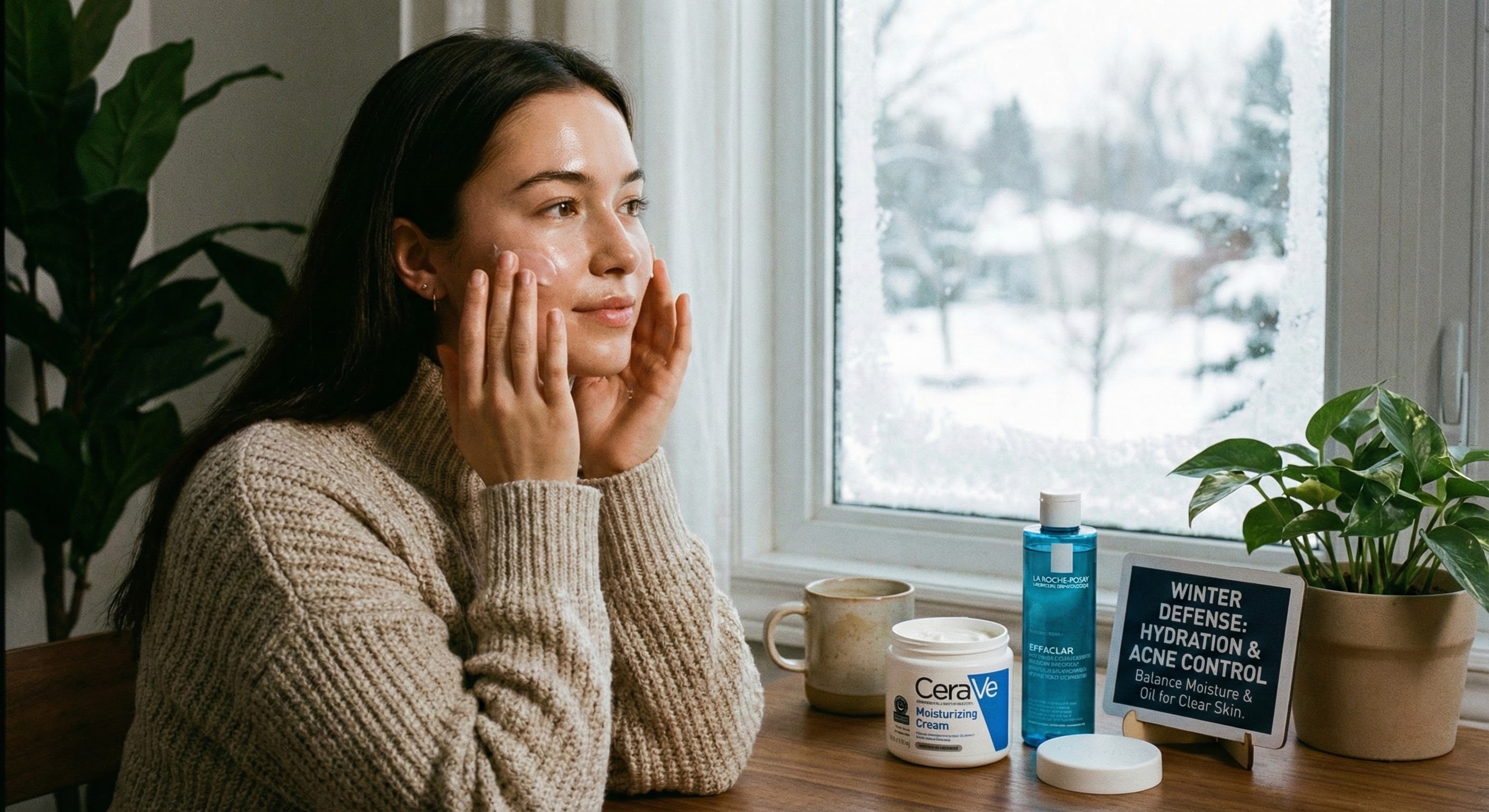
Ever notice how your happy summer skin starts to throw a fit when winter rolls around? You'd think acne would calm down in the cold weather, but sometimes, it can get even worse. If you're dealing with annoying dryness AND unexpected breakouts, you're not alone.
Here's the deal: the cold, dry air outside and the indoor heating can wreak havoc on your skin, leaving it dry and irritated. And that stressed-out skin is the perfect breeding ground for pimples [1].
Why Does Winter Acne Happen?
It might seem weird for dryness and acne to team up, but there's a connection.
- Dry air draws out moisture: Winter air has less humidity, which pulls moisture right out of your skin.
- Dead skin cells build up: When your skin gets dry, dead skin cells flake off more rapidly. These cells can clog pores, trapping oil and bacteria underneath.
- Oil production goes into overdrive: Your dehydrated skin might overreact by producing even more oil to compensate for the lack of moisture, leading to more clogs [2].

How to Fight Back Against Winter Acne
Don't let the cold weather dull your glow. Here’s how to adjust your routine to keep your skin clear and hydrated.
1. Switch to a Gentle, Hydrating Cleanser
That foamy cleanser you loved in the summer might be too harsh for your winter skin. Harsh cleansers can strip your skin of its natural oils, making dryness even worse.
What to do: Look for a cream or milky cleanser. These wash your skin without stripping away essential moisture.
2. Moisturize, Moisturize, Moisturize (The Right Way!)
Now is not the time to skimp on moisturizer. In the winter, your skin might need a little extra help.
What to do:
- Opt for a richer moisturizer: If your lightweight moisturizer isn't cutting it, consider a thicker cream formula. Just make sure it's still "non-comedogenic."
- Apply to damp skin: For maximum hydration, apply your moisturizer right after washing your face while your skin is still a little damp.
Quick Comparison: Summer vs. Winter Routine
| Step | Summer | Winter |
|---|---|---|
| Cleanser | Foaming or Gel | Cream or Milky |
| Moisturizer | Lightweight Gel | Rich Cream / Ceramides |
| Exfoliation | 2-3 times a week | 1 time a week (Gentle) |
| Toner | Astringent | Hydrating (Alcohol-free) |
3. Don't Stop Exfoliating, But Be Gentle
You might be tempted to stop exfoliating when your skin feels dry, but sloughing off dead skin cells is crucial to prevent clogged pores. The secret is to be gentle.
What to do: Instead of harsh physical scrubs, try a gentle chemical exfoliant with lactic acid or mandelic acid. These are gentler than other acids and can help dissolve dead skin cells without irritation. Cut back to once or twice a week.
4. Add a Humidifier to Your Room
Indoor heating keeps us warm, but it's seriously drying. A humidifier can be a game-changer. It adds moisture back into the air, which helps keep your skin hydrated.
5. Don't Forget Sunscreen
Yep, even in the winter! The sun's UV rays can damage your skin year-round, causing inflammation and making acne marks worse. Snow can also reflect the sun's rays, increasing your exposure.
What to do: Apply a broad-spectrum SPF 30 or higher every single morning.
Stay Calm and Glow On
Winter doesn't have to mean a war with your skin. By making a few simple tweaks to your routine, you can keep your skin barrier happy, your moisture balanced, and your breakouts under control.
So enjoy that hot cocoa, cozy up in your favorite sweater, and know that you've got this. You've taken the steps to keep your skin looking great all season long.
When to Visit a Doctor?
Don't waste time on home remedies if:
- Dryness leads to cracking or bleeding (signs of eczema).
- Acne becomes painful or cystic despite gentle care.
- You experience a rash that doesn't go away. A dermatologist can prescribe specific treatments that treat acne without destroying your skin barrier.
Scientific Sources and References
- Engebretsen, K. A., et al. (2016). "The effect of environmental humidity and temperature on skin barrier function and dermatitis." Journal of the European Academy of Dermatology and Venereology.
- Meyer, K., et al. (2015). "Evaluation of Seasonal Changes in Facial Skin." Journal of Drugs in Dermatology.
Note: Images used are for illustrative purposes only.