
The information provided here is for educational purposes and does not replace a doctor's visit.
- Persistent Acne: If you have cystic or severe acne, it requires medical intervention and cannot be treated with moisturizers alone.
- Please consult a doctor before using new potent ingredients especially if you are pregnant or breastfeeding.
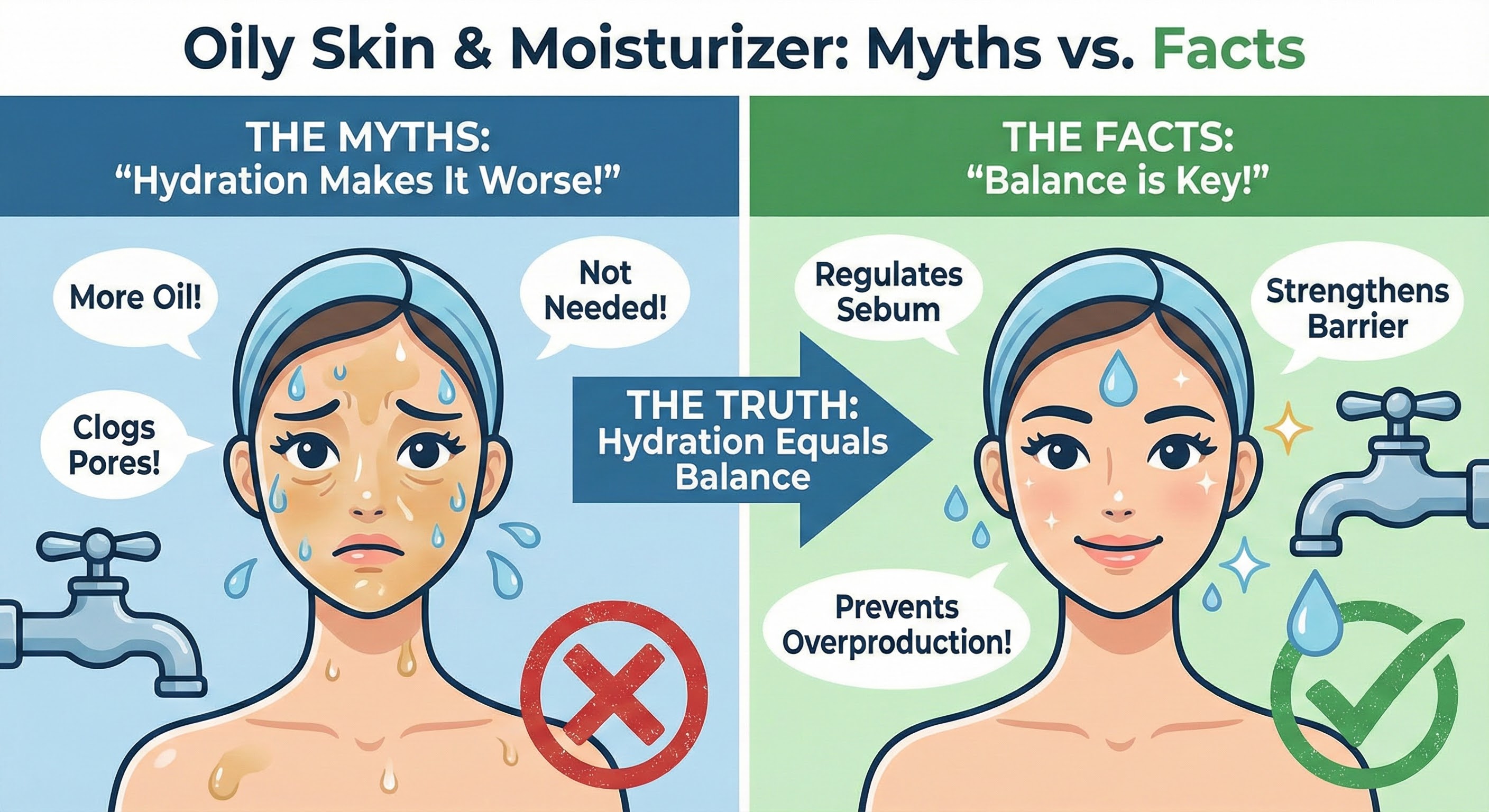
Let's be real—putting moisturizer on already shiny skin might seem illogical, right? You're probably thinking, "My skin produces enough oil to fry an egg, why on earth would I add more?" This is one of the most common beliefs in the skincare community, but it's also one of the most damaging. It is time to uncover the truth: oily skin needs hydration just as much—if not more—than any other skin type.
It might sound paradoxical, but skipping moisturizer can actually make your skin significantly oilier, leading to a frustrating cycle of grease and breakouts that never seems to end. In this comprehensive guide, we will dive deep into the biology of your skin, debunk persistent myths, and give you a scientifically backed roadmap to achieving balance.
The Biology of Oily Skin: Understanding Sebum
To understand why you need moisturizer, you first need to understand what "oil" actually is. The oily substance on your face is called sebum. It is produced by sebaceous glands located deep within your pores.
Sebum isn't the enemy. In fact, it's a critical component of skin health. It consists of triglycerides, wax esters, squalene, and free fatty acids. Its primary job is to:
- Lubricate the skin: Keeping it soft and flexible.
- Waterproofing: Preventing water from evaporating too quickly from the skin's surface.
- Protection: Transporting antioxidants like Vitamin E to the skin surface to fight environmental damage.
However, in oily skin types, these glands are overactive (often due to genetics or hormones), producing more sebum than necessary. The problem arises when we confuse "oil" (lipids) with "water" (hydration).
Note: Oily skin is common in both men and women. In men, higher testosterone levels tend to increase sebum production, while women are affected by hormonal fluctuations during the menstrual cycle and pregnancy. The advice in this guide applies to everyone.
The Dehydration-Oil Cycle: Why Skipping Moisturizer Backfires
This is the most critical concept to grasp. There is a massive difference between dry skin (lack of oil) and dehydrated skin (lack of water).
What Happens When You Strip Your Skin?
When you have oily skin, the temptation is to use harsh, foaming cleansers and alcohol-based toners to "dry it out." You might skip moisturizer thinking you are letting your skin "breathe."
Here is the biological reaction that follows:
- Barrier Disruption: Harsh stripping removes the natural lipid barrier that holds water inside your skin.
- Transepidermal Water Loss (TEWL): Without that barrier, water evaporates rapidly from your skin into the air.
- The Panic Signal: Your skin cells detect this rapid loss of water (dehydration). They send a signal to your sebaceous glands that the skin is "dry" and unprotected.
- Overcompensation: Your oil glands go into overdrive, pumping out excess sebum to try and coat the surface and stop the water loss.
The Result: You end up with skin that is tight, dull, and flaky underneath, but slick and greasy on top. This is the classic "oily-dehydrated" skin condition.

Debunking the Top 3 Myths About Oily Skin
Myth #1: "Moisturizer causes acne."
Fact: Wrong moisturizer causes acne. Heavy, occlusive creams meant for dry skin (like those containing coconut oil or petrolatum) can trap bacteria. However, a lightweight, water-based moisturizer actually helps prevent acne by keeping the skin barrier intact, making it harder for bacteria to penetrate.
Myth #2: "Sunscreen is too greasy, I don't need it."
Fact: UV rays damage the skin barrier and cause inflammation. Inflammation triggers... you guessed it... more oil production and more acne. Modern sunscreens come in gel formulas specifically designed to be matte.
Myth #3: "If it burns, it's working."
Fact: A stinging sensation means your skin barrier is compromised. Irritated skin is inflamed skin, and inflammation swells the pores, trapping oil and causing breakouts. You need soothing hydration, not burning astringents.
The Science of Ingredients: What to Look For
Choosing the right moisturizer is like picking the right fuel for a car. You need high-performance ingredients that hydrate without clogging.
1. Humectants (The Water Magnets)
These ingredients draw moisture from the air or deeper layers of skin to the surface.
- Hyaluronic Acid: Can hold between 200-1000x its weight in water (depending on molecular weight). It feels weightless and disappears into the skin instantly.
- Glycerin: The gold standard of hydration. It's inexpensive, effective, and very gentle.
- Aloe Vera: Provides hydration while soothing redness and inflammation.
2. Emollients (The Smoothers)
These fill in the cracks between skin cells, making skin feel soft. For oily skin, choose lightweight ones.
- Dimethicone: A type of silicone that creates a breathable barrier. It gives a matte finish and blurs pores.
- Squalane (not Squalene): A plant-derived oil that mimics skin's natural sebum but is much lighter and non-comedogenic.
3. Actives (The Regulators)
Look for moisturizers that contain these "bonus" ingredients:
- Niacinamide (Vitamin B3): A superstar for oily skin. It has been clinically proven to regulate sebum production, minimize pore appearance, and fade acne scars.
- Salicylic Acid: Some moisturizers contain low doses (0.5%) to gently exfoliate inside the pore while hydrating.
Comparison: Gel vs. Cream Moisturizer
| Feature | Gel Moisturizer (Best for Oily) | Cream Moisturizer (Best for Dry) |
|---|---|---|
| Texture | Lightweight, Watery, Translucent | Thick, White, Rich |
| Base | Water-based | Oil-based |
| Key Ingredients | Hyaluronic Acid, Aloe | Shea Butter, Lanolin |
| Absorption | Fast, Matte Finish | Slow, Dewy Finish |
| Pore Clogging | Non-Comedogenic | Potential to Clog Pores |
Your Detailed Step-by-Step Routine
Consistency is key. Here is how to incorporate hydration into your day without looking greasy.
Morning Routine (Focus: Protection & Balance)
- Cleanse: Use a gentle foaming cleanser. You want to remove night-time oils but not strip the skin.
- Tone (Optional): Use a hydrating toner (alcohol-free) with green tea or witch hazel.
- Treat: Apply a Niacinamide serum (10% or less).
- Moisturize: Apply a dime-sized amount of gel moisturizer. Massage it in until fully absorbed.
- Pro Tip: Apply to damp skin to lock in extra water.
- Sunscreen: Finish with a matte-finish SPF 30+.
Evening Routine (Focus: Repair & Hydration)
- Double Cleanse: If you wear makeup or sunscreen, start with micellar water or a cleansing oil (yes, oil dissolves oil!), followed by your water-based cleanser.
- Exfoliate (2-3 times a week): Use a BHA (Salicylic Acid) liquid.
- Moisturize: You can use the same gel moisturizer as the morning, or something slightly more nourishing if you are using drying acne treatments like Benzoyl Peroxide.
- Blot: If you feel too greasy before bed, gently blot the T-zone with a tissue, but don't wash the moisturizer off.
Lifestyle Factors: It's Not Just About Cream
Hydrating your skin isn't just external.
- Diet: High-glycemic foods (sugar, white bread) spike insulin, which increases oil production. Focus on Omega-3 fatty acids (walnuts, fish) which help regulate oil.
- Hydration: Drinking water doesn't directly hydrate the skin surface immediately, but severe dehydration will affect your skin's turgor. Aim for 2-3 liters a day.
- Stress Management: Cortisol (the stress hormone) binds directly to sebaceous glands, telling them to produce more oil. Yoga, meditation, or just good sleep can actually make your face less greasy.
Climate and Seasonal Considerations
Humid vs. Dry Climate
- In humid climates: Hyaluronic acid works excellently because it draws moisture from the surrounding air. Very lightweight gel moisturizers are preferred.
- In dry climates: Hyaluronic acid may draw moisture from deeper skin layers if there's no humidity in the air. Consider adding a light occlusive layer over your moisturizer, or choose products containing glycerin and ceramides.
Seasonal Adjustments
- Summer: Use lighter gel moisturizers and increase sunscreen application. Oily skin may only need a moisturizing sunscreen rather than a separate moisturizer.
- Winter: Even oily skin may need a slightly richer moisturizer due to dry air and heating systems. Don't skip moisturizer—just choose a more hydrating formula.
Frequently Asked Questions (FAQ)
Q: Can I just use a hydrating serum instead of a moisturizer? A: Usually, no. Serums penetrate deep, but they lack the sealing properties of a moisturizer. Without a moisturizer on top, the serum might evaporate.
Q: My skin feels tight after washing but oily an hour later. What is this? A: This is the classic sign of dehydrated skin. Your barrier is damaged. Switch to a gentler cleanser and increase hydration immediately.
Q: Will face oils make me break out? A: Not all oils. Mineral oil and coconut oil can clog pores. However, Jojoba oil, Squalane, and Rosehip oil are generally safe for oily skin and can actually help signal your skin to produce less of its own oil.
The Bottom Line
Skipping moisturizer because you have oily skin is like trying to cure thirst by avoiding water. Your skin functions at its biological best when it is hydrated. By giving it the water it craves, you break the cycle of overcompensation, resulting in skin that is calmer, clearer, and yes—actually less oily in the long run.
So, the next time you're tempted to skip the moisturizer, remember this: The right moisturizer isn't your enemy—it's the peacekeeper your skin has been waiting for.
Scientific Sources and References
- American Academy of Dermatology Association. "Moisturizer: Why you may need it if you have acne." Read Source
- Sakuma, T. H., & Maibach, H. I. (2012). "Oily skin: an overview." Skin Pharmacology and Physiology, 25(5), 227-235. DOI: 10.1159/000338978
- Draelos, Z. D. (2018). "The science behind skin care: Moisturizers." Journal of Cosmetic Dermatology, 17(2), 138-144. DOI: 10.1111/jocd.12490
- Pappas, A. (2009). "The relationship of diet and acne: A review." Dermato-Endocrinology, 1(5), 262-267. DOI: 10.4161/derm.1.5.10192
- Bissett, D. L., et al. (2005). "Niacinamide: A B vitamin that improves aging facial skin appearance." Dermatologic Surgery, 31, 860-865. DOI: 10.1111/j.1524-4725.2005.31732
- Del Rosso, J. Q. (2021). "The role of skin care as an integral component in the management of acne vulgaris." Journal of Clinical and Aesthetic Dermatology, 14(6), 27-36. Read Source
- Purnamawati, S., et al. (2017). "The Role of Moisturizers in Addressing Various Kinds of Dermatitis." Clinical Medicine & Research, 15(3-4), 75-87. DOI: 10.3121/cmr.2017.1363
Last Updated: December 11, 2025
Note: Images used are for illustrative purposes only.