
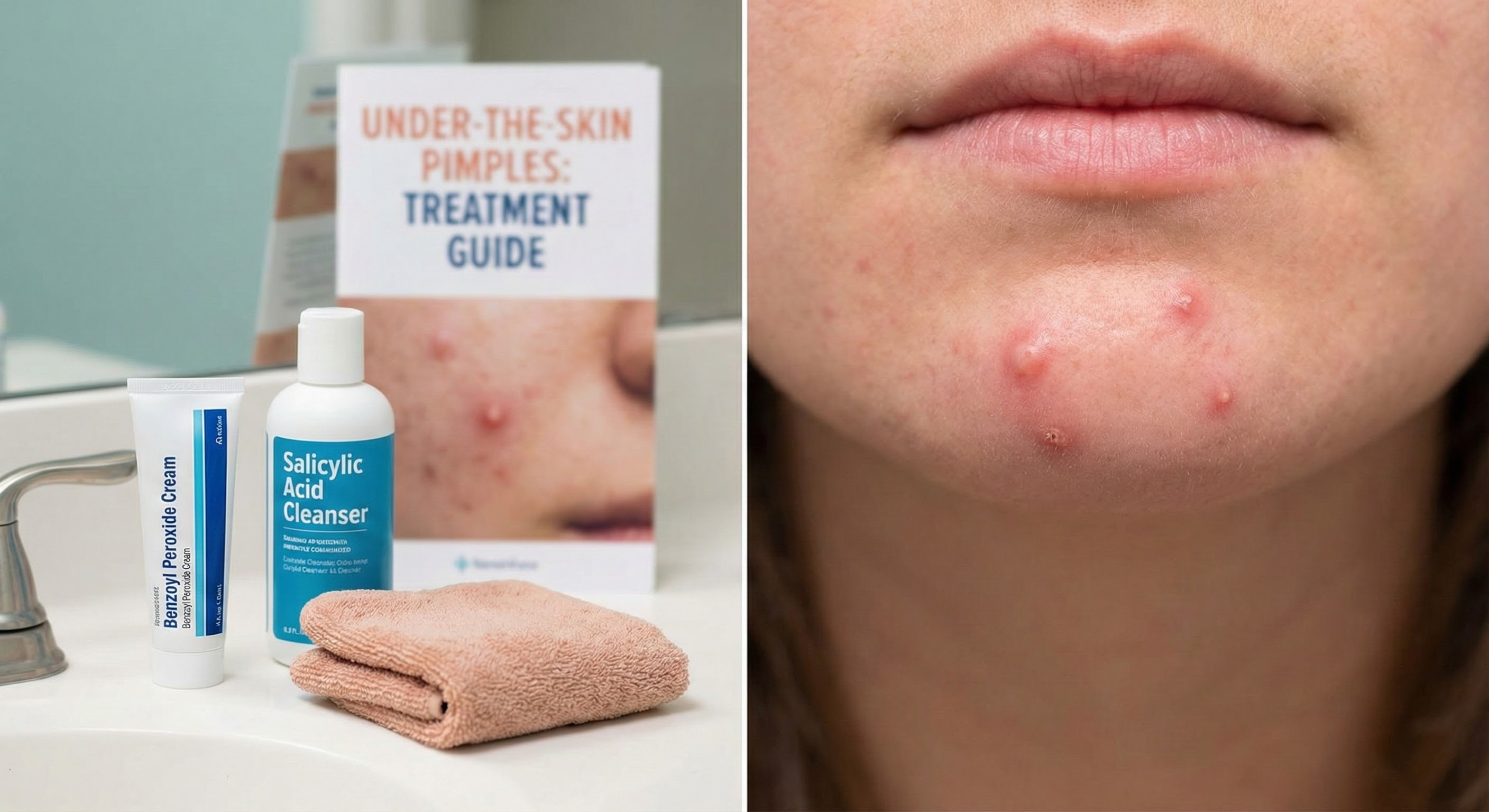
The information provided here is for educational purposes and does not replace a doctor's visit.
- Nodular and Cystic Acne: Require immediate medical intervention to avoid permanent scarring and cannot be treated with home remedies alone.
- Please consult a doctor before using potent ingredients like retinoids or antibiotics, especially for pregnant women.
Those Hidden, Painful Lumps... Your Ultimate Guide to Conquering Under-the-Skin Acne
You wake up on a beautiful morning, wash your face as usual, and suddenly... you feel that mysterious pain when you touch your chin or forehead. There's no whitehead, not even a clear red bump yet, but you know for sure what's hiding there. It's that little "monster" settled deep down.
We're talking about "Blind Pimples," which are often the beginning of what is known as Cystic Acne. They are deeper, more painful, and way more stubborn than surface pimples.
What is the Story of These "Shy" Pimples? (Scientific Explanation)
These pimples form when a blockage occurs in the oil duct deep within the skin, not close to the surface.
- Sebum Retention: Oils and dead skin cells accumulate and harden.
- Infection: C. acnes bacteria multiply in this anaerobic environment.
- Deep Inflammation: The immune system attacks the bacteria, causing swelling that presses on nerve endings (causing pain).
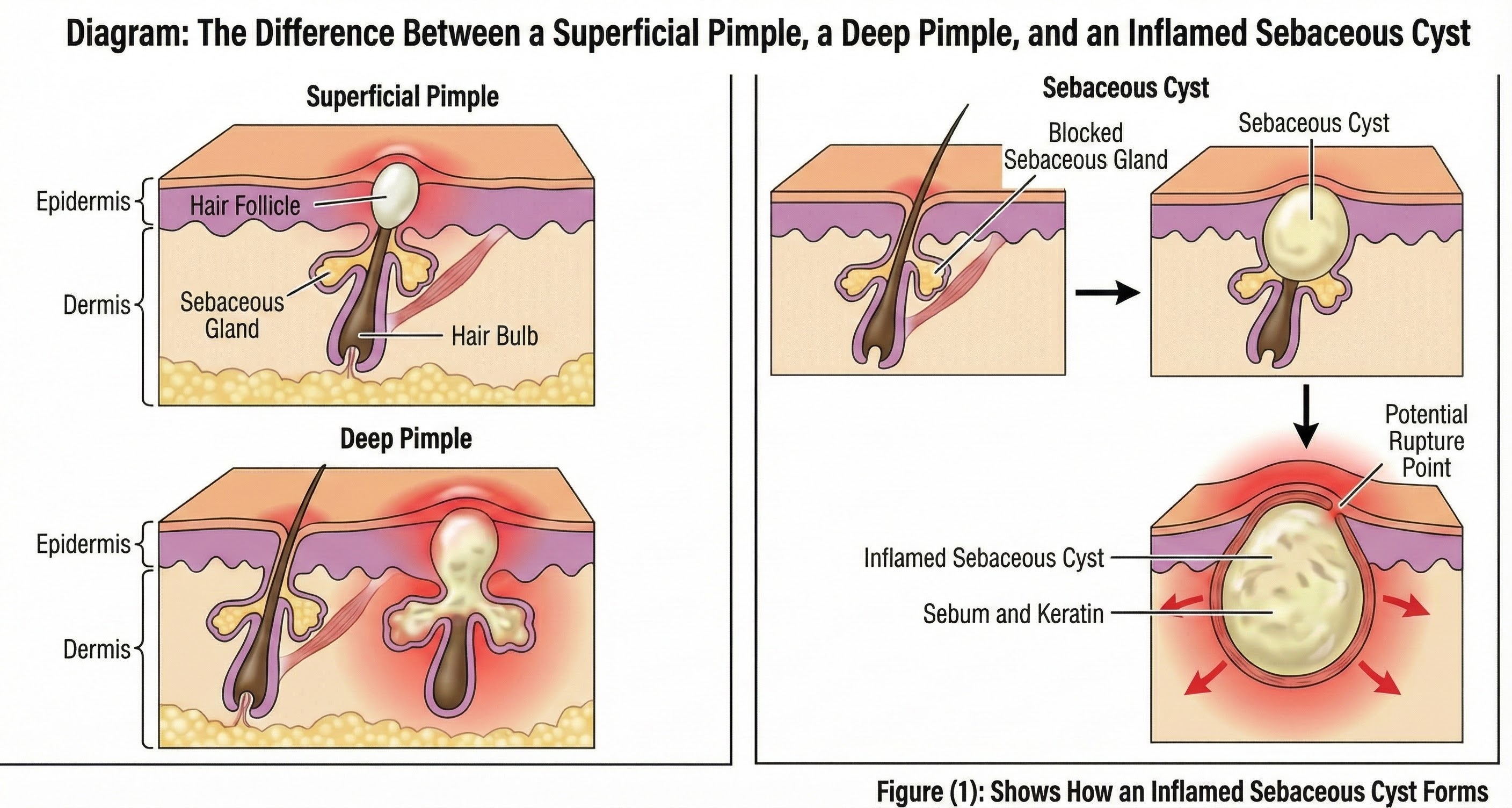
Quick Comparison: Is It a Regular Pimple or Cystic?
| Feature | Regular Pimple (Pustule) | Under-the-Skin Pimple (Cyst/Nodule) |
|---|---|---|
| Location | Superficial (in Epidermis) | Deep (in Dermis) |
| Appearance | Whitehead or yellow head | Large, hard red bump, no head |
| Pain | Mild or only when touched | Severe, throbbing, and constant |
| Scarring | Rarely leaves a mark | Very high probability of scarring |
Golden Rule #1: Stay Away from It!
Trying to "squeeze" a headless pimple is a recipe for disaster. Pressure causes the follicle wall to rupture internally, spreading the infection to nearby healthy tissues and prolonging healing time from days to weeks [1].
Emergency Plan: How to Deal with an Existing Pimple?
1. The Magic of Compresses (Simple Physics)
- Warm Compresses: For "dormant" pimples. Heat increases blood flow and helps the body absorb the pimple or bring it to the surface. (10 minutes, 3 times a day).
- Cold Compresses (Ice): For "very inflamed" pimples. Cold reduces swelling and numbs pain immediately.
2. Spot Treatments (Scientifically Proven)
- Salicylic Acid: Penetrates fats and opens pores.
- Benzoyl Peroxide: Kills bacteria and dries the pimple. (Use 2.5% or 5% concentration to avoid burns).
- Microneedle Patches: Modern technology delivering active ingredients deep into the pimple via microscopic needles that dissolve in the skin.
Prevention: How Do We Stop the "Monsters" from Returning?
The American Academy of Dermatology (AAD) indicates that prevention requires a consistent routine, not momentary treatment [2].
- Topical Retinoid (Adapalene): Considered the first line of defense to prevent future pore clogging. (Requires patience of 8-12 weeks for results).
- Double Cleansing: Especially for those who wear sunscreen or heavy makeup.
- Diet and Skin: Although the relationship is complex, studies suggest that high Glycemic Index foods (sugars, white carbs) may worsen the condition for some [3].
When to Visit a Doctor? (Red Flags)
Don't waste time on home remedies if:
- Pimples cover a large area of the face or back.
- They leave pits or raised scars (Keloids).
- They affect your psychological state and self-confidence. Here, the doctor may prescribe Isotretinoin or hormonal treatments, which are the radical solution for stubborn cases.
Scientific Sources and References
- Zaenglein, A. L., et al. (2016). "Guidelines of care for the management of acne vulgaris." Journal of the American Academy of Dermatology.
- American Academy of Dermatology Association. "How to treat deep, painful pimples."
- Bowe, W. P., et al. (2010). "Diet and acne." Journal of the American Academy of Dermatology.
Note: Images used are for illustrative purposes only.